













Natural beekeeping is a fundamental change in the traditional methods of operation in that it focuses on the health and wellbeing of honey bees and causes minimal impact on the environment. This philosophy focuses on cooperation with nature, on respecting the instinctual powers of the bees and on promoting their natural actions and life cycles. Sustainable beekeeping is not about producing honey but about keeping healthy colonies that can help in biodiversity as well as minimizing ecological footprints.
Core Principles of Natural Beekeeping
Minimal Intervention Philosophy
The principle of natural beekeeping is that the bees are left to construct their own comb, swarm when they need to and that the beekeepers interfere with the hive’s affairs as little as possible. The method honors the developed wisdom of bees and minimizes the stress on colonies. Studies have indicated that colonies that are operated by organic practices can be healthy and productive as those that are operated by conventional systems without the use of synthetic pesticides.
Chemical-Free Approach
Sustainable beekeeping practices are not subject to the use of synthetic chemicals and pesticides as well as antibiotics. Instead, it has also incorporated a pest management approach which incorporates cultural practices and organic approved treatment to pest control. This will see to it that no chemical residues contaminate honey and beeswax and that the health of the colony is not lost in the long run.
Supporting Natural Behaviors
Swarming is not to be discouraged but is natural colony growth, and the beekeepers can only control this process by giving space and capturing swarms to improve genetics. This strategy acknowledges swarming as a normal reproduction activity but not an activity to be suppressed.
Creating Optimal Hive Environments
Hive Design and Insulation
The wild honey bees are naturally attracted to well insulated holes such as hollow trees with thick walls. Bees are advantaged by small openings and large insulation which keeps the winter cluster warm and safe in natural tree cavities. These conditions can be reproduced by contemporary sustainable beekeepers by careful hive design.
Bees are forced to keep the brood temperature at 93-97°F, and more insulated hives do not need as much honey or worker bees to regulate the temperature. Studies have shown that insulating can increase the interior temperatures by 10-15°F and lower the variations in temperature from 20°F swings to just 5°F or less.
Insulation Options:
- Natural wool insulation provides excellent thermal protection
- Horizontal hives like the Layens design with thick insulated walls
- Top-bar and Warré hives that mimic natural tree cavities
- Cork or foam board insulation panels for existing hives
Temperature and Moisture Management
The warm moist air in the natural cavities of the trees is introduced to the top surface, which is insulated and condenses and thus the humidity is reduced and latent heat is given out back in the hive. The right ventilations will ensure that moisture does not accumulate besides ensuring a constant temperature. Moisture-quilt boxes or upper entranceways can be used to increase the ventilation and permit surplus heat and moisture to move out.
Sustainable Colony Management
Local Bee Breeding
The goal should be to replace all losses from within your own apiary rather than purchasing bees from distant sources. This approach:
- Reduces carbon footprint from cross-country bee transportation
- Minimizes disease importation risks
- Develops locally adapted genetics
- Supports sustainable beekeeping economics
Transporting bees over the nation is stressful to the bees, and the change in temperatures causes health complications that can cause stress-related illnesses that haunt the operations over a period of years.
Natural Comb Building
The fact that bees are allowed to make their own combs instead of using ready-made synthetic foundation sheets in the form of plastic sheets will support their instincts and minimize contact with synthetic substances. Natural comb also enables bees to make cell sizes that are optimal to them.
Responsible Honey Harvesting
Ethical beekeepers will only harvest excess honey leaving the bees with sufficient honey to keep the hive alive during colder seasons without flowers. This method puts the survival of colonies in the first place and the extraction of honey in the second place.
Supporting Biodiversity and Forage
Creating Bee-Friendly Landscapes
The planting of a variety of native plants and wildflowers with different times of bloom will provide food to bees all year long. Consider species like:
- Goldenrod
- White clover
- Purple coneflower
- Native wildflowers specific to your region
Pesticide-Free Zones
Position hives should be found where no pesticide is so that complications can be created by the exposure to chemicals, which can influence the reproduction of bees, their navigation, and memory. Work with the local landowners to develop buffer zones.
Water Sources
Bees require water which is available to cool their hives and also to hydrate them. Place in shallow water features like birdbaths with pebbles or dishes with stones, so that bees can be assured of safe spots in which to alight to draw water.
Health Monitoring and Disease Prevention
Regular Hive Inspections
Hive inspections ought to be done twice in a month during warm seasons and once in a month during cold seasons to identify and resolve problems at the initial stages. Nevertheless, natural beekeeping has fewer inspections compared to conventional systems in order to reduce disturbances.
Non-Chemical Disease Management
For common issues like Nosema and American Foulbrood:
- Use natural remedies like oxalic acid
- Implement proper hive hygiene practices
- Ensure adequate ventilation and moisture control
- Maintain strong, well-fed colonies with robust immune systems
Genetic Diversity
Selecting to breed disease-resistant and hygienic colonies develops more resistant colonies that can deal with pathogens in nature. A variety of colonies with many males has a more stable brood nest temperature and environmental adaptation.
Seasonal Considerations
Winter Preparation
Successful overwintering requires three key factors:
- Adequate Food Stores: Ensure colonies have sufficient honey reserves
- Proper Cluster Size: Colonies must have enough bees to maintain warmth
- Dry Conditions: Prevent condensation that can freeze and drip on clusters
The more insulation provided, the less bees must work to maintain cluster temperature, resulting in reduced store consumption.
Spring Build-Up
Further warmth provided by well insulated hives will allow the rapid accumulation of new brood rearing resulting in larger and more productive workforces at earlier times of the season. This puts colonies in a better foraging position.
Summer Management
When hot weather occurs, proper insulation, in fact, keeps colonies cool. The hive walls are thick to stop heat escaping into the hive, and also to allow the bees to better manage the internal temperatures by fanning and evaporation of water.
Long-Term Sustainability Benefits
Environmental Impact
Sustainable beekeeping practices directly contribute to:
- Carbon Sequestration: Healthy bee populations improve pollination, sustaining trees and plants that capture carbon
- Reduced Pollution: Using natural materials and avoiding chemical treatments decreases environmental contamination
- Enhanced Biodiversity: Supporting diverse ecosystems creates resilient landscapes better adapted to climate change
Economic Viability
Honey bee colonies in the United States lose around 30% or more every winter, and Pennsylvania loses about 40%. These survival rates can be enhanced by natural beekeeping and cutting on the input costs that are related to:
- Purchasing replacement bees annually
- Chemical treatments and medications
- Synthetic foundation and equipment
Incorporating Sustainable and Natural Beekeeping Practices in Mad Honey
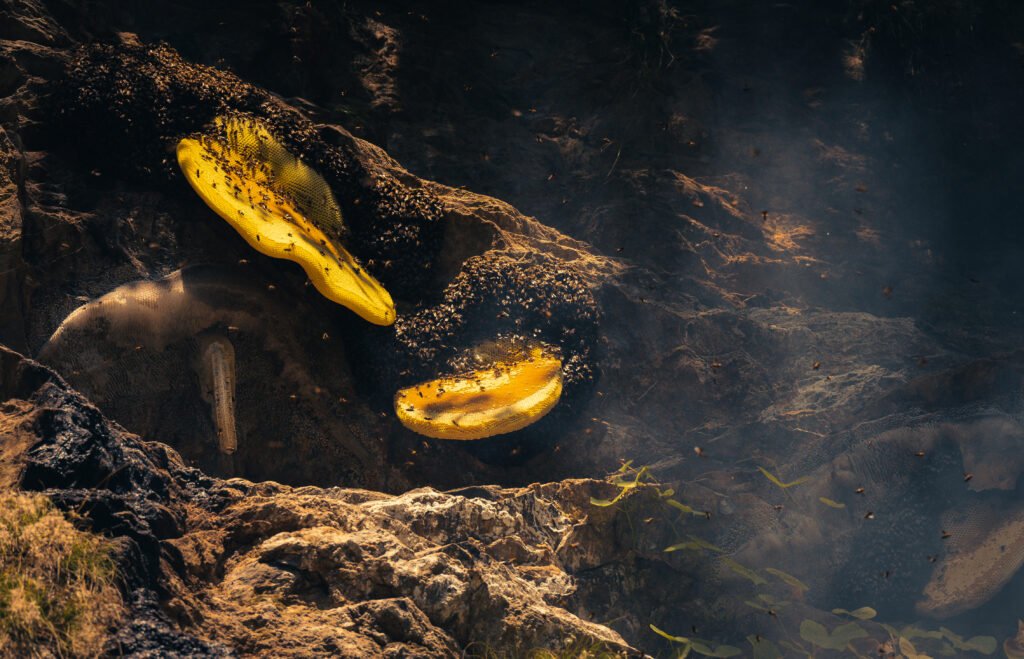
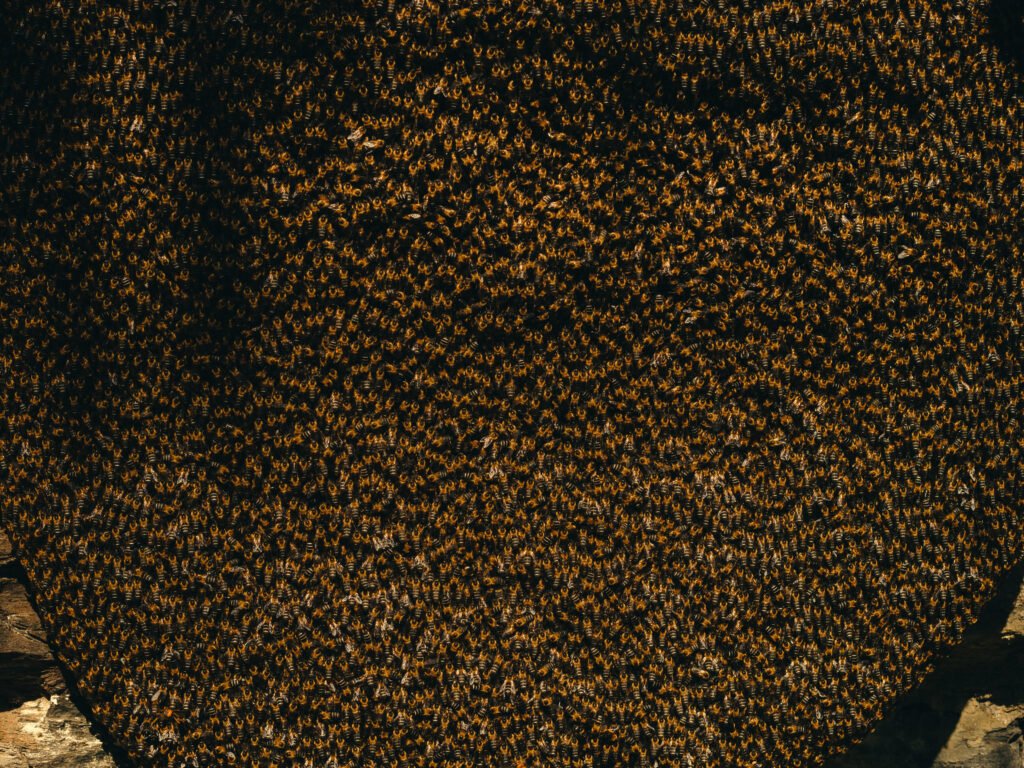
Mad honey production is a special intersection of the traditional beekeeping, sustainable harvesting of wild honey, and preservation of cultural heritage. Mad Honey Nepal is honey produced in Nepal foothills by the Himalayan giant honey bees (Apis laboriosa), which nest on steep and rocky cliffsides at altitudes of 1,200-4,000 meters. It is the rhododendron nectar with grayanotoxins that make this honey acquire its unique properties as bees forage on it.
Mad honey harvesting is a part of Nepalese culture that is held twice a year in spring and autumn, and it is carried out through ritualistic practices, which have been transmitted over generations. Gurung people have been practicing this risky art for centuries, climbing cliffs with the help of the traditional rope ladders and smoke to make the huge bees calmer to harvest honeycomb pieces.
The issue of sustainability has arisen as a result of heightened demand in the world. The population of the Apis laboriosa (Himalayan Gaint Honey Bees) in Nepal has gone through drastic depletes through over harvesting, construction of hydroelectric dams and roads, and destruction of water sources, with a report of 70% reduction in honeybee populations per year on the Himalayan cliffs. Conservation should be a balance between the culture, economic growth of the local people, and the safety of the endangered bee populations.
Educating consumers on the cultural value, labor-intensive ways of harvesting, and conservation issues can be used to create appreciation of mad honey beyond a novelty product. By buying products that are certified to adhere to sustainable harvesting methods and those products that help in the conservation of the area, one is guaranteed that what they buy will help in preserving this amazing tradition instead of damaging it.
Conclusion
Natural beekeeping as a sustainable practice is a reversion to bee working as opposed to managing bees as production units. By monitoring the natural behaviors, beekeepers can maintain healthy colonies that can survive over the years, thus helping to maintain the best environment to keep the colony healthy, deal with pests in an organic manner as well as enhance local adaptation.
Sustainable beekeeping is aimed at protection and conservation of a viable population of healthy and native honeybees and making natural processes and the colony a whole system important. This is not only beneficial to the individual colonies, but also to the larger environmental health by providing better pollination, biodiversity, and lessening chemical input.
Natural beekeeping involves patience, observation and being willing to learn on the part of the bees. The benefits, however, are improved healthier colonies, better quality products, less environmental impact and the satisfaction of being in a true alliance with one of the most amazing creatures on the planet. Sustainable beekeeping is an effective strategy of the current and a prerequisite of the future of apiculture as research continues to confirm these practices.