












Image by TesaPhotography from Pixabay
Where Mochi Health’s Wearables Strategy Started
Mochi Health’s approach to wearable devices began with continuous glucose monitoring, a small sensor worn on the arm that tracks glucose levels throughout the day.
The company introduced that option through its existing network of independent pharmacy partners. This is the same marketplace it uses for medication fulfillment, rather than standing up a separate distribution channel for the device.
The goal, as the company has described it, was giving patients and their providers access to data that feeds directly into an existing care plan.
This means that a glucose reading becomes something a provider can act on rather than a number sitting unused in a disconnected app.
That first step reflected a specific philosophy: a wearable device is only useful to the extent it connects to a care relationship a patient already has.
Blood glucose monitors are the next piece the company is building into that same lineup, extending the same logic to a device that measures glucose differently and, for some patients, serves a different purpose than continuous monitoring does.
What a Blood Glucose Monitor Adds That a CGM Doesn’t
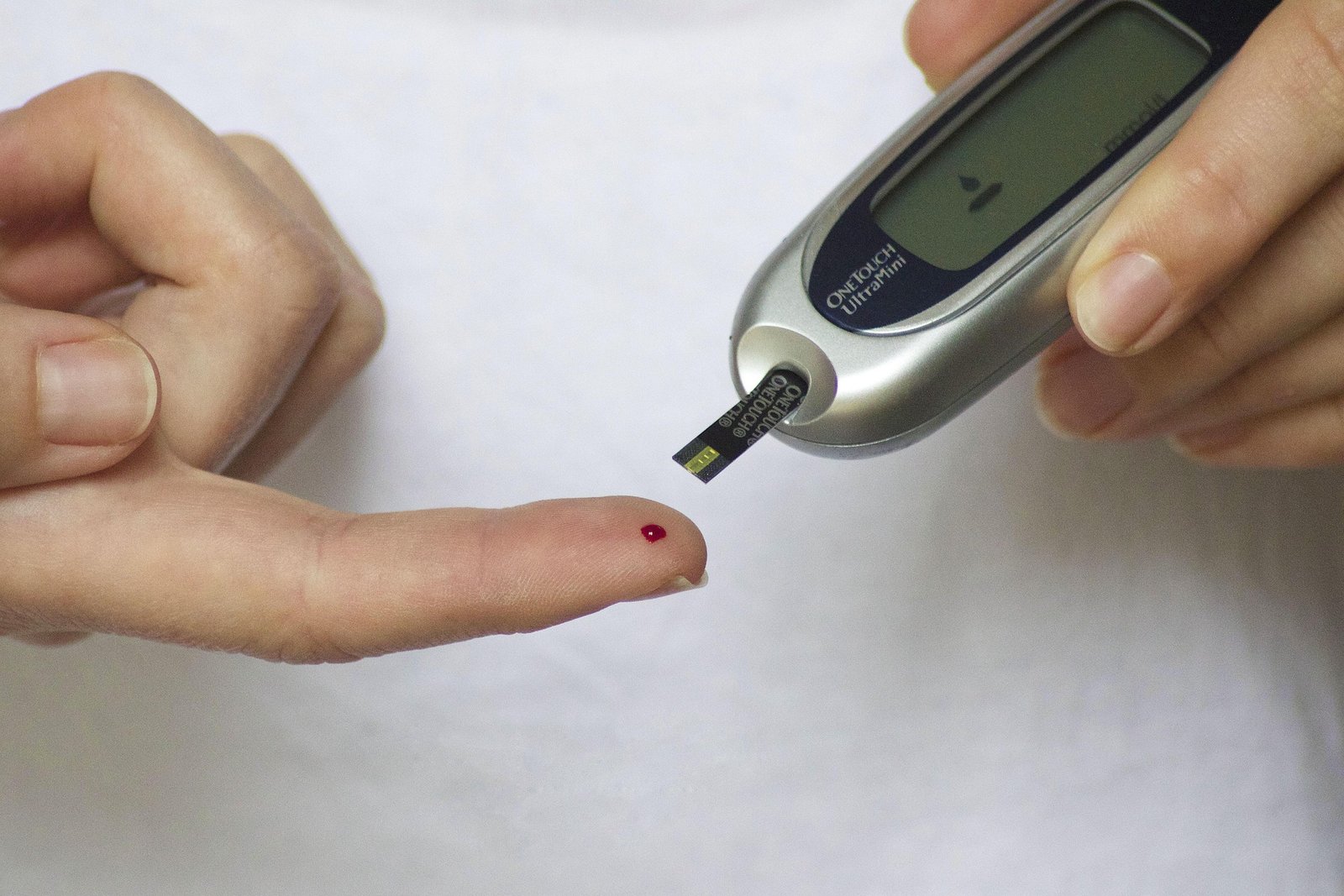
A CGM tracks trends throughout the day and night, showing how different activities affect glucose over time. A blood glucose monitor, typically used with a fingerstick test strip, gives a single point-in-time reading. This is less useful for spotting trends but can be a simpler, lower-cost, and more familiar tool for patients who do not need continuous data or who are earlier in a treatment journey where periodic spot checks are enough.
Offering both options is consistent with how Mochi Health has generally approached its broader medication catalog. Patients on the platform can already choose between compounded and generic medication options depending on what fits their situation. A similar logic applies to monitoring.
Not every patient managing weight or metabolic health needs the same intensity of data, and a platform that only offers one option is making that choice for the patient rather than letting the patient and their provider make it together.
Fitting Monitoring Into an Existing Care Team
Whichever device a patient uses, the value depends on the same structural piece that made continuous glucose monitoring useful in the first place. A care team that actually sees the data and can respond to it.
Mochi Health’s model already pairs patients with a physician and, in many cases, a registered dietitian or nutrition specialist, both of whom benefit from having visibility into glucose patterns when they are adjusting a treatment plan or a nutrition approach.
A blood glucose reading that only the patient sees is a data point. A blood glucose reading visible to the provider adjusting that patient’s GLP-1 dose is a clinical input.
That is the same reasoning the company applied to its original glucose monitoring launch, delivered through its pharmacy network rather than a separate app a patient would have to manage on their own.
Extending that approach to a second device rather than replacing the first one keeps the same principle intact: the device should slot into the existing relationship a patient has with their care team, not create a new, disconnected one.
Why Mochi Health Is Building Toward Options, Not One Device
The broader pattern here is that Mochi Health has generally avoided treating any single product as the entire answer to a patient’s needs.
The platform’s expansion into nine new specialty categories beyond weight loss, its introduction of generic medication alongside compounded options, and its layering of a second glucose monitoring device onto an existing one all follow the same shape. Start with one solid option. Prove it works. Then? Add adjacent options that give patients and providers more ways to tailor a plan rather than forcing everyone through an identical path.
That approach has a cost. It is slower and more operationally complex than simply picking one device or one medication formulation and scaling it as widely as possible.
It also means the company’s wearables lineup is best understood as a strategy still being built out, one piece at a time, rather than a finished product line with every option already available to every patient on day one.
The Bigger Pattern Behind the Add-On
Continuous glucose monitoring proved that a wearable device could be meaningfully integrated into a marketplace built around independent pharmacies and a coordinated care team rather than sold as a standalone gadget.
A second device, built on the same distribution and the same principle of feeding data back to a provider who can actually use it, suggests the company sees wearables generally, not just glucose monitoring specifically, as infrastructure worth continuing to invest in.
For patients, the practical takeaway is straightforward. More monitoring options are becoming available inside the same care relationship they already have, rather than requiring a separate purchase and a separate app disconnected from the provider managing their treatment.
Whether the next addition to that lineup is another glucose device or something else entirely, the underlying model is the constant the company is building around.
Mochi Health has not published a specific launch date, price, or availability timeline for blood glucose monitors at the time of this writing.
Patients interested in the option should check directly with the company or their provider for current availability in their state.
What is established is the direction: a platform that started with one wearable, tied deliberately to an existing care team and pharmacy network, is expanding that category rather than treating it as a one-time feature. Patients evaluating the platform’s monitoring options should weigh what is confirmed today against what the company has signaled is coming, rather than assuming every option described here is already active everywhere.
Sources: Mochi Health platform materials and prior reporting on Mochi Health’s continuous glucose monitoring launch through its independent pharmacy network; company-provided information on the wearables category as of 2026.