













The Australian Dental Association recommends booking a child’s first dental appointment when the first tooth comes through or by the first birthday, whichever comes first. Decay can start before a parent can see it, and an early look catches it while management is simple.
That guideline is a population-level marker, issued by professional bodies on the basis of research, and it works as a starting point. First teeth arrive on very different schedules, so the right week for an individual child is a short conversation with the dentist.
The case for taking baby teeth seriously
Baby teeth fall out, which leads some parents to treat them as placeholders that don’t need much attention. But those temporary teeth do real work while they last.
Deciduous teeth hold the space the permanent teeth will need later. They give the tongue a surface to shape sounds against while speech develops, and they let a child chew a varied diet through the years of fastest growth. Lose them early to decay and the spacing for adult teeth can drift, which is one reason dentists treat small cavities in small teeth as worth fixing.
Decay in infants and toddlers has its own name, early childhood caries, and it can move quickly through young enamel. The first appointment exists in large part to screen for it before it shows. Caught at the chalky stage, it can be managed before a cavity forms. By the time a parent can see the problem, it has often progressed further than expected.
Timing the first appointment
The first-tooth-or-first-birthday guideline works on whichever arrives first. Most children cut a first tooth well inside their first year, though some arrive months earlier and some later. Either way, the guideline gives parents a date they can plan around.
Earlier than the guideline is sometimes right. A parent who notices a change in a tooth’s color, or a mark that doesn’t wipe away, has reasonable cause to book. If a fall may have damaged a tooth, contact the dentist promptly for advice.
The appointment works best before anything hurts. Small children rarely report early decay, and early decay rarely hurts. Pain is a late symptom, and a first appointment built around pain is a harder first appointment.
The dentist can confirm the timing at any point. A phone call to the practice settles it for children whose teeth arrived on a schedule that confused the calendar.
What decides how long the appointment runs
First appointments are usually brief, and no practice can promise an exact length in advance. How much the child cooperates is the biggest factor.
A settled toddler who accepts the chair and opens on request takes less time than one who needs to warm up. Age plays a part, and so does temperament on the day. A child who has missed a nap or arrived hungry has less patience for a new room, so the booking time is part of the plan.
The scope of the visit matters too. A look and a conversation run quicker than an appointment that adds a preventive coating. Parents with a long list of questions should say so when booking, so the practice can allow for it. Some children need a few minutes in the room before anyone looks in their mouth, and practices that see many toddlers plan for that.
The dentist sets the pace. If the child has had enough, a good clinician stops while the visit is still a success and leaves the rest for next time.
What the first appointment involves
The examination
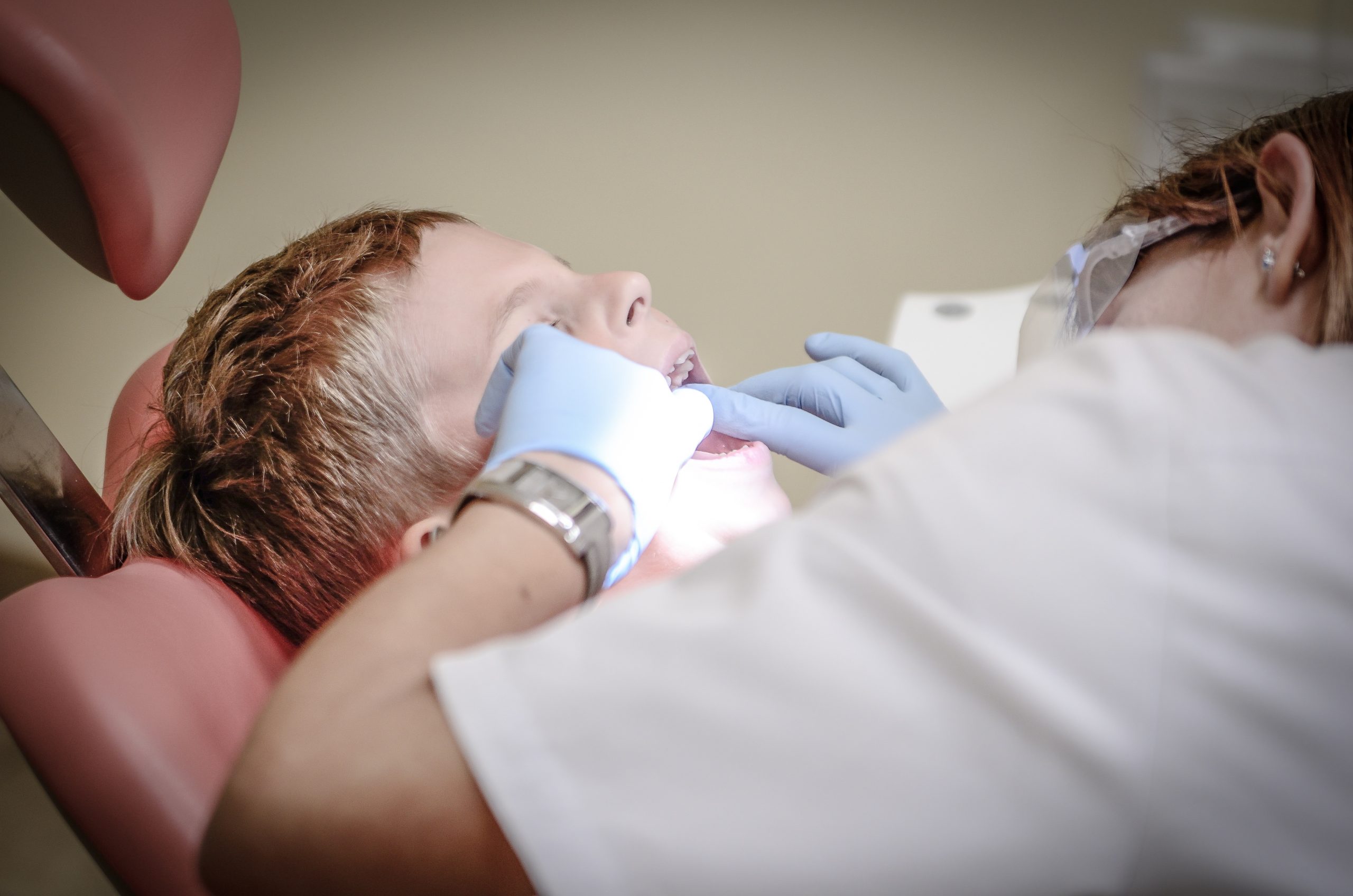
For very young children, the examination often happens knee-to-knee. The child sits on the parent’s lap facing them, then leans back so the head rests on the dentist’s knees. The child can see the parent the whole time, and the parent is doing the holding.
The dentist looks at the gums, the jaw, the bite and the soft tissues of the cheeks and tongue. Teeth get counted, and the surfaces get checked for the early chalky changes that precede visible decay. None of the noisy equipment parents remember from their own childhoods comes into play at this stage. The bite gets attention as well: jaw growth and early alignment are watched across visits, because a developing problem caught early leaves more options for later.
Prevention and the conversation
The dentist may offer a fluoride varnish, a protective coating painted onto the teeth in a few strokes. Parents can ask whether it suits their child and what it does. Sealants come up later: thin coatings for the chewing surfaces of molars, raised once those teeth are through.
Much of the appointment is a conversation sometimes called anticipatory guidance. Teething, habits, diet and cleaning at home all get covered, along with what to expect before the next visit. Parents who write their questions down beforehand get more out of this part, and this conversation is where the appointment most often stretches.
Choosing a practice and building a dental home
The choice of practice shapes how well the first visit goes. Experience with very young children heads the list of what to look for. Patience with a wriggling toddler, continuity of staff from visit to visit, clear explanations for parents and unhurried first appointments follow close behind.
A practice will naturally describe itself well, and parents can test the description at the first visit. Watch how the team handles a hesitant child.
Dentists call the arrangement a dental home: one practice that holds the records and sees the family on a routine basis, so the child and the team get to know each other over years. A child who knows the room and the faces walks in calmer each time, and the dentist is comparing each visit against a known history. With records in one place, nothing has to be explained twice.
Families in Hobart’s northern suburbs searching for children dentist chigwell can look for a practice that sees the same child from the first tooth onward. A short drive makes it harder to let appointments slip.
Cost is worth asking about directly. Publicly funded oral health programs for children exist in many regions, and practice staff can usually check a child’s eligibility quickly. Preventive appointments sit at the modest end of dental costs, and decay caught early is usually simpler to treat.
Preparing the child, and the parent
With the practice chosen, preparation starts at home, days ahead. Playing dentist with a toy mirror, taking turns counting each other’s teeth, gives the child practice at the real thing. Picture-book versions of a dental visit do similar work if one is on the shelf.
The words parents choose can work against them here. “Pain” and “hurt” create an expectation the appointment won’t meet, and “needle” has no place in the conversation at all. Plain, positive descriptions work better: the dentist counts teeth and looks at them with a little mirror. A child old enough to have questions about the visit should get plain answers to them.
Children read their parents closely. A parent who is visibly tense about dentistry teaches the child to be tense, and a parent who treats the visit as ordinary gives the child permission to feel the same. Parents who carry their own dental anxiety do the child a service by letting the dental team lead the appointment.
A comfort object in the bag and a booking at the child’s best time of day complete the preparation. The goal for visit one is modest: a child who leaves willing to return.
Thumb-sucking and pacifiers
Thumb-sucking and pacifiers come up in nearly every early appointment. Both habits are ordinary self-soothing in babies and toddlers, and dentists aren’t alarmed by them in the early years, so parents can put the guilt away.
The picture changes if a strong habit persists while the palate and bite are still forming. At each visit the dentist checks the shape of the palate and the way the teeth meet, and a habit that is starting to leave a mark will get a mention. The dentist raises it as information, not as a criticism.
When the time comes to wind a habit down, the dentist can suggest approaches that fit the child. Gentle and gradual methods tend to work better than pressure, which can entrench the habit. The right moment differs from child to child, and it is another judgment best made with the dentist.
Home care after the first visit
Care at home starts before teeth do. Many parents begin by wiping the gums with a clean damp cloth after feeds, which gets the child used to having a mouth tended. Once teeth are through, a small soft brush takes over, and the dentist can advise on toothpaste and how much to use at each stage.
Children take years to develop the dexterity a thorough brush needs. Parents do the brushing, or stand over it, until that skill arrives, and the dentist can help judge when a child is genuinely ready to take over. Cleaning between teeth joins the routine once the teeth touch, and the dentist can show the easiest way to manage it. This supervision can continue for years and helps children clean their teeth thoroughly at home.
Food and drink patterns come up in the first appointment because they shape decay risk directly. Frequent sweet drinks and snacks keep decay risk high between meals, and the dentist will talk through realistic adjustments.
Before leaving the practice, ask when the dentist wants the child back. The interval depends on the child’s decay risk, and booking the next appointment on the spot removes the job of remembering it.